
A THOUGHT TO START WITH
Some people follow the patterns they inherit. Others start to question them. And some decide to take a completely new direction.
When you start noticing your emotions, reactions, and relationships (including the one with yourself), something starts to shift. What once felt automatic becomes something you can understand. And what you understand, you can begin to change.

Hey, I’m Nisha!
Therapist and founder of Brown girl trauma
I help cycle breakers understand their emotions, recognize inherited patterns, and build healthier relationships with themselves.
If you feel overwhelmed by your emotions, find yourself repeating the same patterns, or want to understand yourself better, you’re in the right place.
You don’t have to figure everything out today. You just need a place to start. Let’s take it one step at a time.
STEP 1: Understand Your Emotions:
You may have heard advice like “feel your feelings” or “process your emotions” and wondered, Okay… but what does that actually mean?
What can you do when you feel anxious before a family gathering? Or when a small comment lingers in your mind for days?
This is a good place to begin.
Here, you’ll learn practical skills like naming your emotions, recognizing your triggers, noticing how emotions show up in your body, understanding the needs behind them, and finding regulation strategies that actually work for you.
If you’d like practical, step-by-step tools for understanding your emotional reactions, start with these posts:
- How to Process Your Emotions (When No One Taught You How)
- Can You Sit With It Instead? 4 Simple Steps to Actually Feel Your Feelings
- If Your Emotions Go From 0 to 100, This DBT STOP Skill Can Help
- How to Stop Emotional Monitoring (When No One Taught You How)
Looking for a visual framework to help make sense of your emotional reactions? Explore my DBT Model of Emotions Handout →

DBT Model for Describing Emotions
If you’re struggling to understand an emotional experience, this DBT Emotion Description Model was made to help you break it down.
STEP 2: Explore Family Patterns & Beliefs:
All families have certain patterns. Some are easy to spot, while others feel so normal that we might not notice them until much later.
Looking more closely at these patterns can help you understand why some habits, reactions, and ways of thinking feel automatic.
The goal is not to judge your family, but to understand the patterns, beliefs, and experiences that have shaped you.
If you’d like to learn more about family patterns, beliefs, roles, and generational habits, start with these posts:
STEP 3: Start Journaling & Notice Your Patterns:
You may have started recognizing certain emotions, beliefs, or family patterns that show up in your life. Now it’s time to pay attention to how they play out day to day.
This is where I recommend journaling!
Before you click away thinking, “I’m not really a journal person,” hear me out.
Journaling helps you slow down and really see what’s going on. You can notice the situations that trigger you, the thoughts that keep coming back, the boundaries that are hard to set, and the habits or relationship patterns that repeat.
Writing things down regularly makes it much easier to notice patterns that are hard to catch in the moment.
If you’re ready to start, here are some prompts to help you begin journaling:
- 60 Guided Journal Prompts to Help You Process Your Emotions
- Noticing a Pattern? 3 Simple Journal Prompts to Help You Spot the Cycle You’re In
- 50 Monthly Reflection Questions to Explore Your Needs
- 31 Daily Journaling Prompts to Help You Stop Emotional Monitoring
- 50 June Journal Prompts for Exploring the Family Roles You Grew Up With
Step 4: Rebuilding Trust in Yourself:
When people start paying more attention to themselves, they often begin asking new questions.
- What is truly important to me?
- Can I rely on my own judgment?
- What habits & routines actually support me?
- What goals am I working toward?
- What do I enjoy outside of my responsibilities?
In this section, you’ll explore these questions and learn how to build more trust in yourself as you go.
Many people spend years searching for answers, approval, reassurance, or permission from others.
After a while, it can be hard to know what you truly want, need, or value.
The good news is that you can build self-trust. It often happens through small actions you repeat over time.
You can do this by setting boundaries, keeping small promises to yourself, building routines that support your well-being, and making time for hobbies, goals, and interests that matter to you.
If you want to build a stronger relationship with yourself, you can start by reading these posts:
Step 5: Grab Some FREE Printables
A blog post can be a great place to start, but sometimes you need more help to put what you’ve learned into practice. That’s why I made these resources.
My printables and worksheets help you turn ideas into action with simple, practical exercises you can use right away. You won’t have to guess or wonder what to do next.
If you want more structure and step-by-step help, check out these resources:

Breaking the Cycle of Self-Abandonment
Catch self-abandonment in real time, understand your triggers, and respond differently.
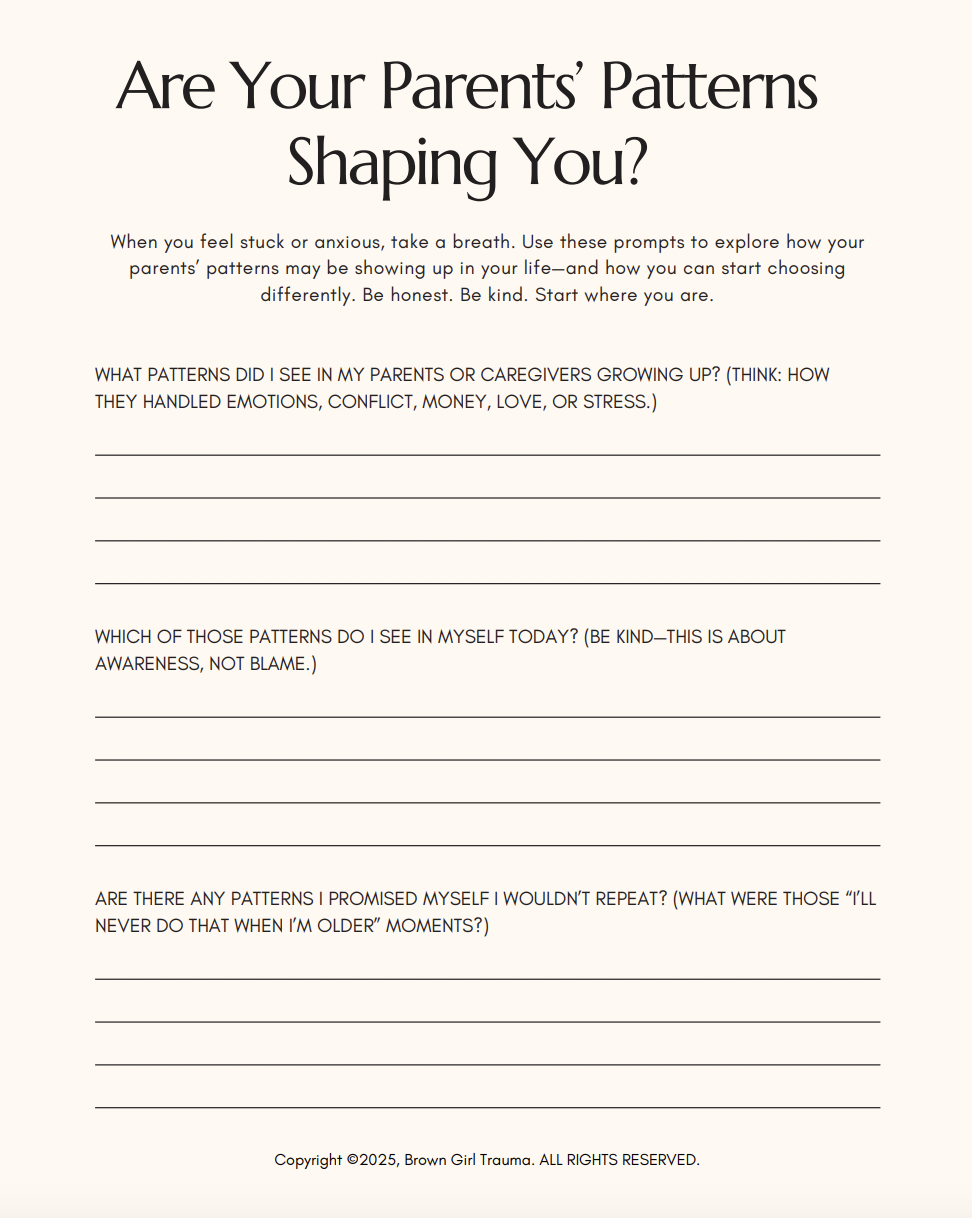
Family Patterns Worksheet
Explore inherited family patterns, recognize their impact, and choose healthier responses today.

Anxiety Reflection Worksheet
Understand anxious thoughts, challenge unhelpful fears, and focus on realistic next steps.
Step 6: A Little Support in Your Inbox
Hey, Cycle Breaker
A weekly newsletter where I break down emotions, family patterns, and personal growth into practical tools, thoughtful reflections, and journal prompts you can actually use.